




At Redroad Tours, human development and sustainable tourism are values we hold dearly. We believe travel and tourism are great tools for mutually developing both the travellers and the host communities. Our experiential tours to East Africa are two-pronged; we offer unique cultural and community immersion experiences born from our many years of working in these communities. Redroad Tours also aspires to offer travellers keen on a naturally intimate and up and close experience in the wild. Students, experts, enthusiasts, and researchers are led down the road that directly fosters conservation and sustainable eco-tourism.
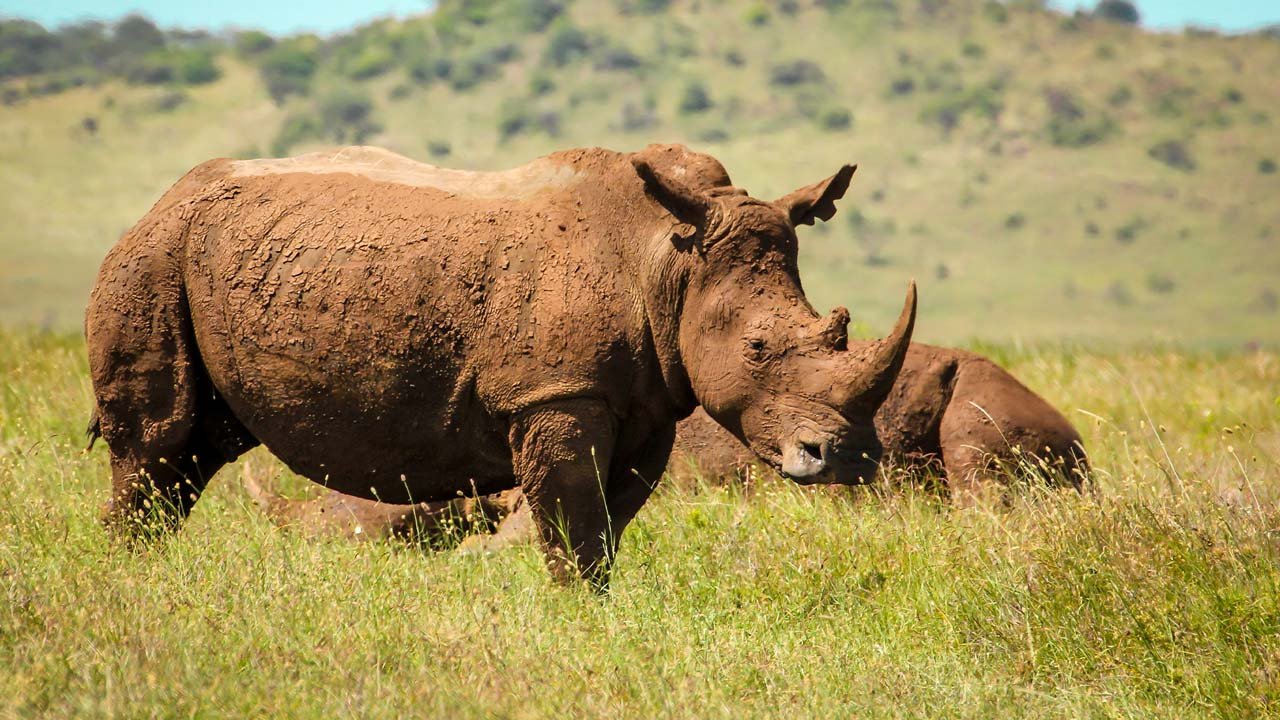
The dwindling number of rhinos globally makes rhino tracking a delicate but truly special affair. These majestic creatures are the second-largest land mammals but have sadly been plagued by poaching to near extinction. The rhino is not to be found roaming free in any game parks in Uganda, which explains why rhinos inside Ziwa Rhino Sanctuary in Uganda are physically protected 24/7.
Experiential Tours to Africa guests are taken on emotionally exciting and unforgettable guided tours. At Ziwa Rhino Sanctuary, rhinos are safe and occasionally bred to ensure continuity of the Great Rhino. The Lewa Wildlife Conservancy in Kenya is home to the Black Rhino is a great place to check out. Mkomazi Rhino Sanctuary in Tanzania is incredible too.
Kenya and Tanzania are hotspots for lion tracking. Kenya has had to contend with the constant conflict between nomadic tribes and wildlife in the past. The Maasai nomads are known to protect their cattle passionately and will do anything within their might, including killing lions to do so. Lion tracking inside conservancies like Ol Peteja in Kenya is a smart attempt to ensure coexistence between tribal communities and wildlife.
Lion tracking expeditions are perfect because they foster certainty of lion sightings, unlike ordinary game drives where sightings of lions are rare. Queen Elizabeth National Park in Uganda, home to tree-climbing lions, equally runs a commendable research-centred lion ranch where one may appreciate lion behaviour close. Travellers keen on a research centred tracking expedition may on request be paired with Dr Caroline Ngweno, a lion conservationist based in Kenya.
Gorilla Habituation is a delicate process that fosters familiarisation between Mountain Gorilla families in the wild and humans. Habituation takes anywhere between 2-3 years and is done by primate experts, trackers, rangers and conservationists. The Gorilla Habitual experience is a deeply intimate four-hour encounter between humans and wild gorillas. Unlike gorilla trekking which is somewhat detached and only an hour-long, habitual experience allows tourists to intimately watch and study gorilla families and get to know individual gorillas by trait and name.
Gorilla Habitual Experience is only offered in Uganda; booking is made six months prior. An enhanced gorilla experience may be negotiated with us thanks to the partnership between Redroad Tours and Dr Gladys Kalema, a primate expert who accompanies trekkers at a slightly improved fee – this is convenient for conservationists and zoology students.
Conservancies are great travel destination options combining tourism, research, and conservation. Conservation Safari allows for a trip that appeals to all the senses; travellers get to venture into the vast savannah on foot where they can feel, smell, touch African Wildlife without limiting themselves to just seeing wildlife from the comfort of vehicles.
For instance, the Elephant Orphanage in Kenya is premised on rescuing and preserving elephant calves orphaned by poaching activities. Travellers get to ‘adopt’ elephants, learn about them, and hand-feed them. Conservancies equally focus on rhinos, primates, giraffes, and snakes.
There is no better way to truly understand the life and spirit of East Africa than through experiential tours to East Africa, which invite travellers to immerse themselves in the traditions and hospitality of the local people. Cultural immersion tours typically involve staying with a host family, with whom you’ll forge genuine connections as you share in their chores and break bread together. Alternatively, one might choose shorter stays, village tours, or suburban community walks. Spice up your stay in East Africa by volunteering with partner organisations that work towards the human development of vulnerable communities through medical outreaches, literacy, advocacy or entrepreneurship.
Interact with locals at a depth and level that’s impossible with traditional tours. Meet people you would otherwise not meet; see places you would otherwise not see. Listen to the music of a new language; feel strange new words slip across your tongue. Attend a wedding celebration; sway to the rhythm of drums and ancient prayers. Speak with tribal elders and students; watch as the ghosts of East Africa come to life through stories, music, laughter, and dance.

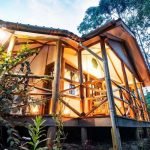
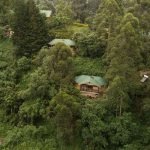
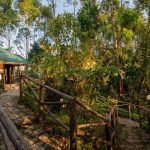
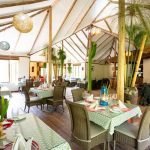
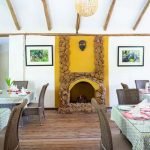
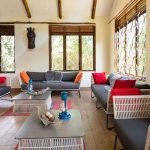
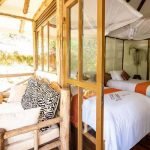


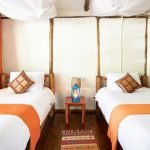
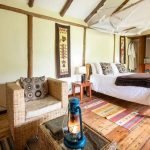
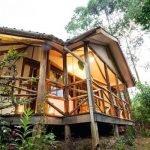
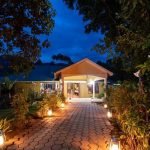
Gorilla Safari Lodge is a private and secluded upmarket lodge with spectacular views of the Bwindi rainforest and located close to the Gorilla Trekking starting point. The lodge consists of spacious chalets, the main lodge area with a restaurant, and a bar overlooking the Bwindi rainforest and a gift shop. It also has free WIFI available at the main lodge area.
These are chalets, each consisting of a spacious room, a private terrace, and en-suite bathroom. They are beautifully decorated and nicely lit with great views of the Bwindi rainforest. Each room is fitted with large comfortable beds, plush linen, mosquito net wrapping around the bed, lounge furniture, and a fireplace. The bathrooms have flush toilets and showers with hot and cold running water.
Meals are all included; 2 breakfasts, two lunches, and two dinners. The restaurant offers 3-course meals of local and international specialties.
Spacious and nicely-decorated rooms
Great location
Spectacular views of Bwindi rainforest
Elaborate meals and variety of choices
Spacious restaurant
Free WIFI
No WIFI in the rooms
| Pax | 1 | 2 | 3 | 4 | 5 | 6 |
| Price per person | $2,125 | $1,754 | $1,692 | $1,661 | $1,642 | $1,629 |
Prices are based on double room occupancy. You can upgrade to a single room for $106 per person.
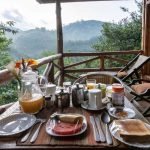
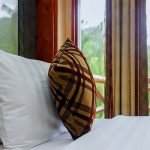
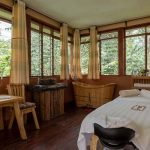
Rushaga Gorilla Camp is a mid-range mountain lodge located in the south-eastern part of the park near one of the four gorilla trekking starting points known as Rushaga. The lodge has excellent panoramic views of the Bwindi forest and is a 5 minutes' walk to the gorilla trekking starting point. It also has a restaurant that offers a full English breakfast, an a la carte lunch menu, and a choice of 3 set meals for dinner. You can also access free WIFI at the main lounge and restaurant area of the lodge.
These are spacious cottages with large comfortable beds and linen, lounge furniture, and a private terrace looking towards the Bwindi rainforest. All rooms have a spacious private bathroom with flush toilets, solar-powered hot showers, a sink, and a dressing countertop and mirror.
Your stay includes two breakfasts, two lunches, and two dinners. The meals are all made from western or intercontinental cuisine.
Relatively good price
Great location
Spacious rooms
Views of the Bwindi rainforest
Free WIFI
Not nicely decorated
The linen is comfortable but not plush
Limited food items at the restaurant
| Pax | 1 | 2 | 3 | 4 | 5 | 6 |
| Price per person | $1,834 | $1,448 | $1,385 | $1,354 | $1,335 | $1,323 |
Prices are based on double room occupancy. You can upgrade to a single room for $146 per person.
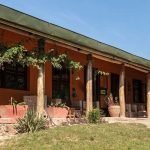
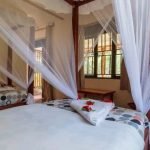


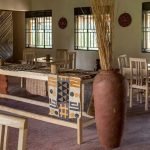


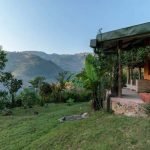
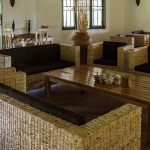

Gorilla Valley Lodge is a small, low-budget lodge located in the south-eastern part of the park near one of the four gorilla trekking starting points known as Rushaga. The lodge has a small restaurant that offers a basic continental breakfast and a few options of international cuisine for lunch and dinner.
These are clean and modestly furnished brick and motor rooms consisting of a comfortable bed, linen, towels, and en-suite bathrooms. The bathrooms have solar-powered hot water showers and flush toilets. The rooms also have lighting, power plugs, and mosquito nets over the beds.
Only breakfast and dinner are included in the basic plan. You can order lunch daily at the restaurant.
Affordable and comfortable rooms
Good location
Basic facilities
Small rooms
Limited meal options
Limited views
No internet access
If there are no rooms available at the time of your booking. We will provide a suitable replacement.
| Pax | 1 | 2 | 3 | 4 | 5 | 6 |
| Price per person | $1,438 | $1,187 | $1,125 | $1,094 | $1,075 | $1,062 |
Prices are based on double room occupancy. You can upgrade to a single room for $89 per person.
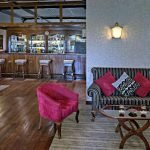
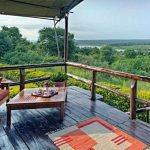
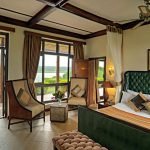
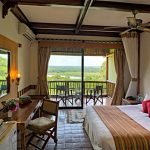
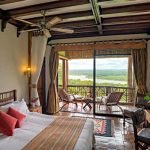
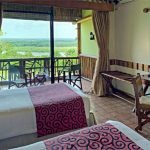
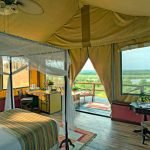
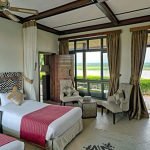
Paraa Safari Lodge is an upmarket lodge with the refinements of a 3-star hotel, located in the center of the park looking over the Nile river. Facilities include spacious rooms, a restaurant, a bar, a pool with a bar, and a gift shop.
Paraa safari lodge boasts the best location in the park and offers the conveniences of being so close to the jetty for your boat safari on the Nile river, and close to the game viewing areas of the park. No lodge offers more conveniences for your 3 Days Murchison Falls Safari than Paraa Safari Lodge.
The rooms are nicely lit, decorated with plush linen, and towels. All rooms have a private bathroom with hot showers and a hairdryer. The rooms have a coffee bar, a reading table, refrigerator, complimentary bottled water, and a private balcony.
Meals are all included; two breakfasts, two lunches and two dinners. The restaurant offers three-course meals of local and international specialties.
Spacious and comfortable rooms
WIFI available in all rooms
Great location for game drives and boat safari
Elaborate meals and variety of choices
The standard rooms have a ceiling fan, but no air-conditioning. You can upgrade to a deluxe room for $35 per person per room.
Note: If there are no rooms available at the time of your booking, we will recommend a suitable replacement.
| Pax | 1 | 2 | 3 | 4 | 5 | 6 |
| Price per person | $1,241 | $902 | $825 | $786 | $763 | $748 |
Prices are based on double room occupancy. You can upgrade to a single room for $106 per person.
.
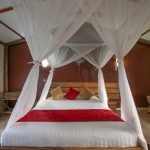

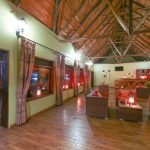
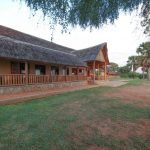
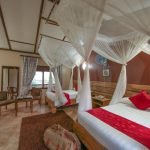
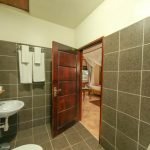
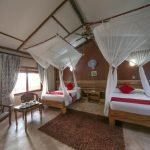
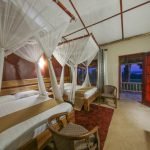
Pakuba Safari Lodge is a mid-range lodge, located on the northern side of the park facing the Albert Nile. The facilities include a restaurant, terraced room blocks and a swimming pool.
The lodge is in an excellent location for game drives and with nicely furnished rooms, offering you better value for your money compared to other mid-range accommodations, making Pakuba the ideal lodge for your 3 Days Murchison Falls Safari.
All rooms have a private bathroom with solar-powered hot showers, a reading table, a closet, and a private terrace. The rooms are all air-conditioned.
This plan is inclusive of all meals. The price includes two breakfasts, two lunches, and two dinners during your stay. The meals are all made from western or intercontinental cuisine.
Reasonably priced.
Excellent location for game drives
Comfortable rooms with air-conditioning
WIFI at the main lobby and at the restaurant
The lodge is a 45 mins drive from the Paraa jetty, where the boat safari begins and ends.
Rooms lack a coffee or tea bar and Hair dryer.
The linen is comfortable but not plush
Note: If there are no rooms available at the time of your booking, we will recommend a suitable replacement.
| Pax | 1 | 2 | 3 | 4 | 5 | 6 |
| Price per person | $1,141 | $763 | $685 | $647 | $624 | $608 |
Prices are based on double room occupancy. You can upgrade to a single room for $146 per person.
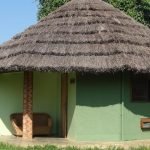
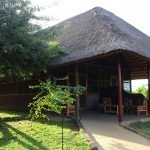
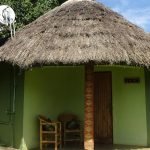
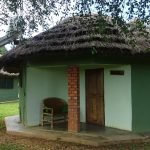
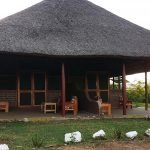
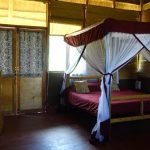
Red Chilli Rest Camp is a low-budget camp located in the center of the park on the southern side of the Nile, only 500 meters from the ferry crossing point. You stay in brick and motor, African thatched houses locally known as bandas.
The camp also has a restaurant that offers an a la carte breakfast and lunch menu, and a choice of 3 set meals for dinner. The combination of a great location and a right level of comfort makes Red Chilli Rest Camp the ideal budget accommodation for your 3 Days Murchison Falls Safari.
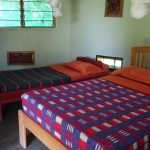
The bandas all include a double bed or two twin beds with linen and a mosquito net. A few bandas have private bathrooms, but most uses shared bathrooms. All the bandas have lighting, power plugs, and a fan. There’s a limited number of Ensuite bandas. The camp has shared toilets and bathroom stalls with hot water available.
The basic plan includes breakfast. You can buy lunch and dinner every day at the restaurant.
It’s inexpensive and safe.
Even though Red Chilli Rest Camp’s location is better than other budget accommodations, it’s not the best for game viewing. It takes about 30 minutes, including crossing the Nile on a ferry to get to the wildlife. The ferry has set crossing times, and these can limit the amount of time you spend viewing the animals. All the other low-budget camps have the same challenge. None is close to the wildlife.
Electricity is only available at set times of the day, except lights are always on. The set times are from 7 am to 9 am, 11 am to 2 pm, and 5 pm to 10 pm. Outside these hours, guests charge appliances such as phones and camera batteries at the restaurant.
No WIFI
Note: If there are no rooms available at the time of your booking, we will recommend a suitable replacement.
| Pax | 1 | 2 | 3 | 4 | 5 | 6 |
| Price per person | $918 | $597 | $520 | $481 | $458 | $442 |
Prices are based on double room occupancy. You can upgrade to a single room for $89 per person.